Defining ‘Western Europe’ is problematic. It has meant different things to different people at different times. Numerous definitions float around; those used by UNESCO, The U.N. and NATO all vary. The UNESCO definition compasses all countries west of Slovenia and the Czech Republic (United Nations). This is the definition that shall be used.
The Western European ‘way of life’ is also quite hard to characterise. Ways of life are often associated to culture, how people live their lives (1974). The major problem is that each country has an individual cultural style. The differences can be seen in the arts, work practices, leisure activities and the numerous languages. However for all the differences there are some similarities. Sporting activities such as Football, Tennis and Athletics are all popular in many European nations. The most significant similarity is that of the democratic and civil rights of the people. Every country in Western Europe is listed as a democratic state with free and fair elections (Freedom House, 2007). Continue reading “Our People, Our Way of Life”
Author: Dan Smith
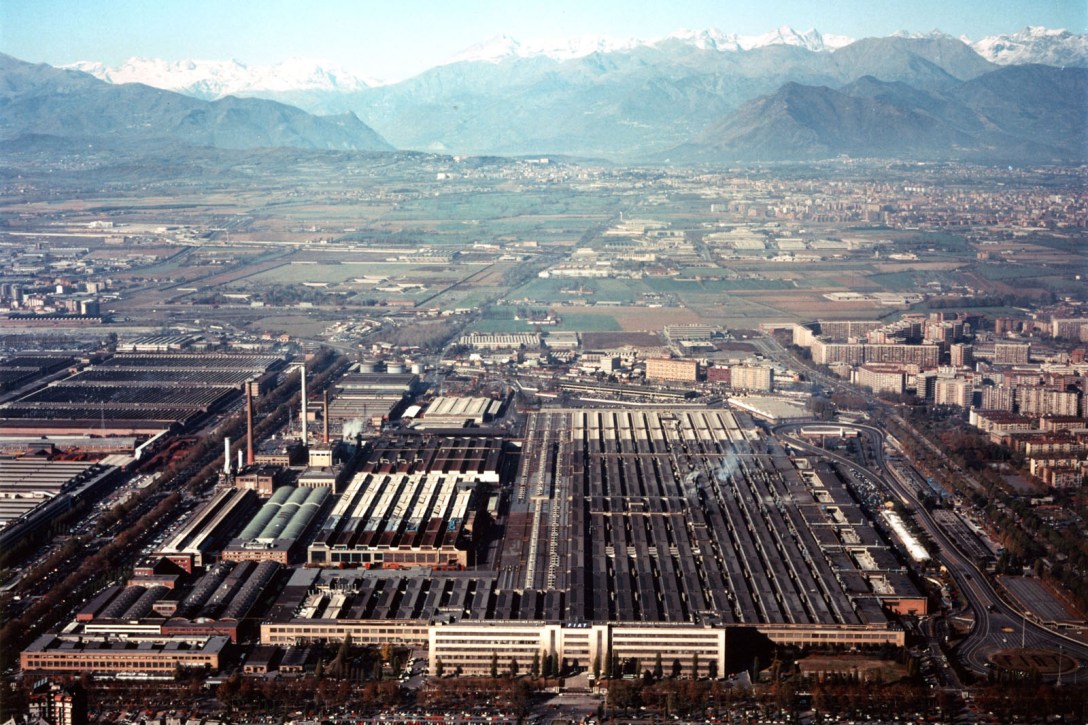
Fordism and the 20th Century City
Systems Theory
Complex system science has arisen through the understanding that components and interactions between them are rarely linear and isolated (Chorley & Kennedy, 1971). Component variations can result in disturbances reverberating across temporal and spatial scales. The outcome of this can be severe system instability or even collapse. Complete knowledge of a system therefore cannot be achieved through studying isolated sections alone. Systems are more than the sum of its parts and thus far societies have proved this by continuing to apply practises that persistently result in degradation.
Introduction
Interaction between humans and their environment is unavoidable. Every decision and action taken has an environmental consequence. Outcomes range in spatial and temporal significance and can be beyond our immediate environment.
Let Them Eat Cake
Food. Humans constantly consume food from the moment of birth until the day they die. What constitutes as food and what is consumed will change constantly over time and space. Why is this? Why have the eating habitats of societies changed throughout the years? Why do different cultures eat different foodstuffs? What makes food, food?
This discussion aims to examine three facets surrounding food. Firstly how do things become and how does meaning and purpose align itself with objects to turn them into food? Secondly the production and commodification of food will be examined. Lastly The processes of consumption, what we eat and why will be investigated. By grounding this discussion with real life examples, hopefully some insights into the food economy can be drawn.
Time’s Running Out
I read somewhere (Tumblr) that the age of the watch is over. done. dead and buried. In 5-10 years the numbers of people that are wearing watches will fall and people wont be buying them any more (I can’t find the link to the article. sorry). The reason? They are single purpose objects. They exist only to tell the time and have no other functions. You can’t make coffee with it, it doesn’t take pictures and useless as a weapon against sharks. It tells the time and that is it. Continue reading “Time’s Running Out”